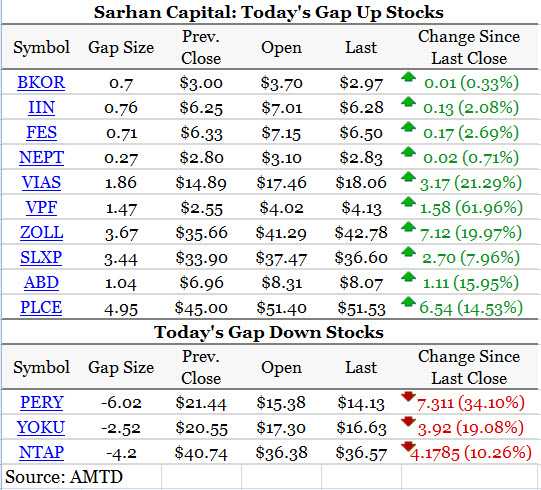
Thurs 11.17.11 Gap Up/Down: Stocks & ETFs


Market Action: Price & Volume B+
As we know, the major averages topped out in October 2007 and then proceeded to precipitously plunge until they put in a near-term bottom in early March 2009. Since then, the market snapped back and enjoyed hefty gains which helped send the major averages to one of their strongest 18-month rallies in history. The small cap Russell 2000 Index was the standout winner, surging a whopping +117%. The tech-heavy Nasdaq Composite is a close second, having vaulted +100%before reaching its interim high of 2,535 on April 26, 2010. The benchmark S&P 500 Index raced+83% higher before hitting its near term high of 1,219 on April 26, 2010, and the Dow Jones Industrial Average soared +74% before printing its near-term high of 11,258 on April 26, 2010.
This data indicates that Monday, April 26, 2010 appeared to be a very important day for the market because that is the day that most of the popular averages printed their near-term highs and negatively reversed by closing lower from new recovery highs. In addition, after such hefty moves, the 11-18% pullback was healthy enough to help shake out the weak hands and send the major averages higher last month. However, if the 2010 lows are further breached, then odds will favor that even lower prices will follow. Allow us to be clear: the action since the July low has been robust, very healthy, and suggests the bulls are now back in control of this market. Trade accordingly. Never argue with the tape, and always keep your losses small.
December 2010 Stock Market Commentary: The major averages surged in December and enjoyed double digit gains in 2010. Furthermore, the 18-week rally which was confirmed on the September 1, 2010 follow-through day (FTD) remains intact which is a healthy sign for 2011. Background: Before we address the current market outlook, it is important to step…

Friday 12.23.16 U.S. equities closed mostly flat on Friday ahead of the Christmas holiday, as the Dow Jones industrial average failed again to reach the psychologically important level of 20,000. The Dow closed about 15 points higher, with UnitedHealth contributing the most gains. “This is the last full trading week of the year. The Dow…
September 2010 Market Commentary The major market indexes scored a sound follow-through day (FTD) on September 1, 2010 and spent the rest of the month racing higher. This corresponded with a steep sell off in the US dollar and a robust rally in many well-known commodities. The benchmark S&P 500 index and the Dow Jones Industrial…
Art Cashin, head of floor operations at UBS, has the buzz from the NYSE.
Read here: https://www.forbes.com/sites/adamsarhan/2017/06/29/a-near-term-top-the-v-word-has-returned-to-wall-street/#5d72016e1ebd